Overview
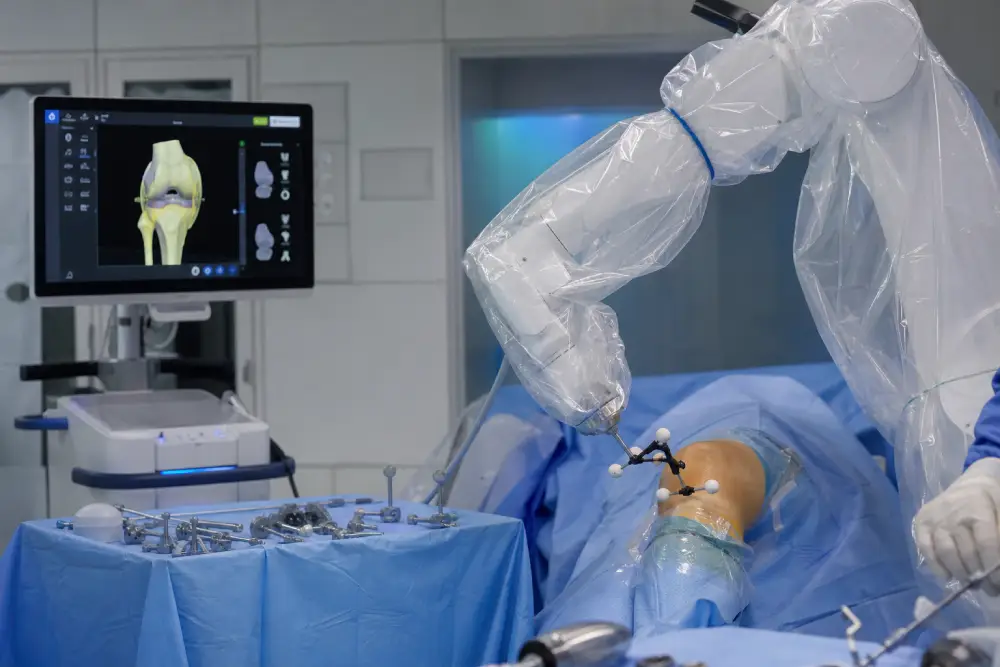
Robotic knee replacement uses computer-guided technology to plan and position the implant with a high degree of precision. Mr Hansom uses this technology to complement his surgical technique, aiming to support accurate alignment and a well-balanced, functioning knee. It is often considered for patients with complex anatomy or those seeking a highly personalised approach to total or partial knee joint replacement.
What the procedure involves
A detailed 3D model of the knee is created and used to plan implant position before surgery. Mr Hansom then carries out the replacement under general or spinal anaesthetic, guided in real time by the robotic system to help achieve precise bone cuts and soft-tissue balance throughout the procedure.
- Personalised, computer-guided implant planning based on your own anatomy
- Bone-preserving, precise surgical cuts guided by the robotic system
- Total or partial robotic-assisted replacement options available
- Mobilising with a physiotherapist within a day of surgery
Your recovery
Recovery generally follows a similar pathway to conventional knee replacement. Most patients are walking with support within a day and home within one to two nights, with many returning to driving at around 6 weeks. A structured rehabilitation plan supports strength, flexibility and confidence in the new joint over the following months.
Quick facts
Procedure time
1–2 hours
Anaesthetic
General Anesthetic only
Hospital stay
1–2 nights
Back to driving
~6 weeks
Full recovery
3–12 months
or call +44 1786 451 669